
Why Your Body Jerks When Falling Asleep — The Science of Hypnic Jerks
That sudden jolt when you're drifting off to sleep is called a hypnic jerk. Learn why it happens, what triggers it, and science-backed ways to reduce it for better sleep.
You know the feeling. You’re drifting off, muscles relaxing, thoughts dissolving into nonsense — and then your whole body jolts like you just fell off a cliff. Your heart is pounding. You’re wide awake. And you have no idea what just happened.
It’s called a hypnic jerk (also known as a hypnagogic jerk or sleep start), and it happens to roughly 70% of the population on a regular basis. It’s one of the most common sleep phenomena in existence, yet most people have no idea why it happens.
The answer involves a fascinating miscommunication between your brain and your body during one of the most vulnerable transitions in your daily life: the shift from wakefulness to sleep.
What Exactly Happens During a Hypnic Jerk
When you fall asleep, your body goes through a series of rapid changes in the first 5-15 minutes:
- Your muscles relax — voluntary muscle control starts shutting down
- Your heart rate drops — from ~70 BPM awake to ~55-60 BPM
- Your breathing slows — becomes deeper and more rhythmic
- Your brain shifts — from beta waves (alert) to alpha waves (relaxed) to theta waves (drowsy)
The hypnic jerk occurs during the transition from Stage 1 (NREM1) to Stage 2 sleep. Here’s what goes wrong:
Your reticular activating system (RAS) — the brain structure that keeps you awake — is powering down. But it doesn’t shut off cleanly like flipping a switch. It sputters. And during one of those sputters, it misreads the signal.
Your muscles are relaxing rapidly. Your brainstem interprets this sudden loss of muscle tone as falling. It fires an emergency signal to your motor cortex: “We’re falling! Contract everything! NOW!”
The result: a full-body muscle contraction — the jerk — often accompanied by a vivid sensation of falling, tripping, or stepping off a ledge.
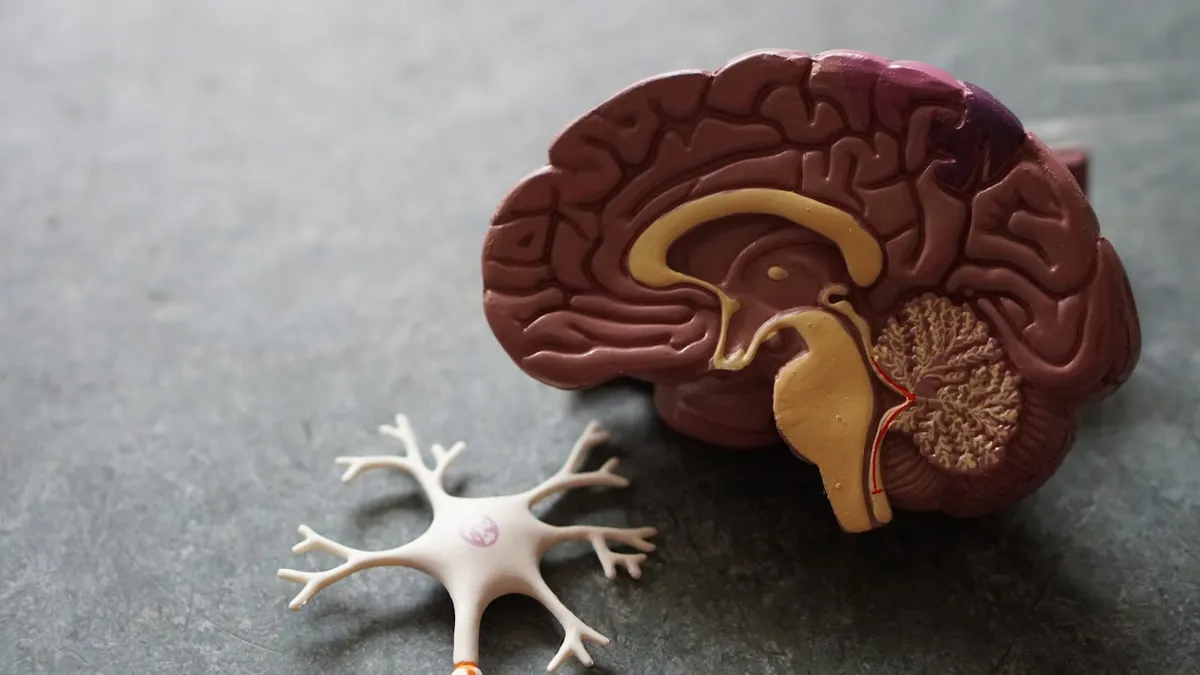
Think of it this way: Your brain has two systems fighting for control during sleep onset — the wake system (RAS) and the sleep system (VLPO). A hypnic jerk is basically the wake system’s last desperate “Are you SURE we should be shutting down?” before it loses the fight.
Three Theories: Why Does It Happen?
Researchers don’t fully agree on a single explanation, but three leading theories have strong evidence:
Theory 1: The Evolutionary Alarm (Most Widely Accepted)
This theory proposes that hypnic jerks are an ancient reflex from when our ancestors slept in trees. A sudden muscle relaxation could mean you’re losing your grip on a branch — falling to your death. The jerk is a last-chance grab reflex.
Supporting evidence:
- Primates who sleep in trees experience similar startle reflexes at sleep onset
- The jerk is strongest in limbs (arms and legs), consistent with a “grab the branch” response
- The accompanying falling sensation matches what you’d feel losing your grip
Theory 2: The Nervous System Misfire
As your brain transitions from wake to sleep, it switches from voluntary motor control to involuntary regulation. During this handoff, signals can get crossed. The motor cortex fires a random burst of activity as it powers down — like a computer’s hard drive clicking before it goes silent.
Supporting evidence:
- EMG studies show that hypnic jerks involve the same motor pathways as voluntary movements
- They’re more common when you’re extremely tired (sloppy transition)
- Caffeine and stimulants increase their frequency (overactive wake system resists the handoff)
Theory 3: The Muscle Tone Misread
Your brainstem continuously monitors muscle tone. During wakefulness, your muscles maintain a baseline tension (even when you’re relaxed, your muscles aren’t truly limp). As sleep onset reduces this tension rapidly, the brainstem may interpret the change as a dangerous signal — similar to how a sudden drop in blood pressure triggers a faint-prevention reflex.
Supporting evidence:
- Progressive muscle relaxation before bed reduces hypnic jerk frequency in studies
- People who fall asleep very quickly (rapid onset) experience more jerks than gradual sleepers
- The jerk itself resets muscle tone, supporting the idea that it’s a corrective mechanism
What Triggers More Hypnic Jerks?
While occasional jerks are normal, certain factors significantly increase their frequency:
| Trigger | Why It Increases Jerks | How to Fix |
|---|---|---|
| Caffeine after 2 PM | Overstimulates the wake system, creating a rougher transition | Cut caffeine by early afternoon |
| Sleep deprivation | Exhausted brain rushes through sleep stages sloppily | Consistent sleep schedule |
| High stress / anxiety | Elevated cortisol keeps the RAS hyperactive | Relaxation techniques before bed |
| Intense exercise before bed | Nervous system still in “fight” mode | Exercise 3+ hours before sleep |
| Uncomfortable sleeping position | Uneven muscle tension confuses the brainstem | Supportive pillow and mattress |
| Alcohol before bed | Disrupts normal sleep architecture | Avoid alcohol 3+ hours before bed |

Reassurance: Hypnic jerks are completely harmless. They don’t indicate any neurological problem. If you experience them nightly, it’s usually a sign of poor sleep hygiene or high stress — not a medical condition. However, if they’re accompanied by other symptoms (loss of consciousness, prolonged muscle spasms, or confusion upon waking), consult a doctor.
How to Reduce Hypnic Jerks
You can’t eliminate them entirely — they’re a normal part of human neurology. But you can significantly reduce their frequency:
1. Create a Gradual Sleep Transition
The key insight from the research: hypnic jerks happen when the wake-to-sleep transition is too abrupt. Anything that makes this transition more gradual reduces jerks.
A 15-20 minute wind-down routine works:
- Dim lights 30 minutes before bed (signals melatonin production)
- Put screens away (blue light keeps the RAS active)
- Do progressive muscle relaxation: tense and release each muscle group from toes to head
- Start your sleep soundscape early — ambient sounds give your brain something to entrain to during the transition
DreamTone is particularly useful here. Starting a layered soundscape 15-20 minutes before you intend to sleep gives your brain a consistent auditory environment during the vulnerable transition period. The gradual engagement with the sound layers eases the handoff between wake and sleep systems. Set the sleep timer for 60-90 minutes and let it fade naturally.
2. Manage Stimulants
Caffeine has a half-life of 5-6 hours. A coffee at 3 PM means half the caffeine is still in your system at 9 PM. Your wake system is chemically propped up, making the transition to sleep rougher and jerkier.
Rule of thumb: No caffeine after 1-2 PM if you sleep by 10-11 PM.
3. Address the Stress Loop
Stress → poor sleep → more stress → worse sleep. Hypnic jerks are often the most visible symptom of this cycle. Your cortisol is elevated, your RAS is hypervigilant, and your brain doesn’t trust that it’s safe to shut down.
Breaking the cycle:
- 4-7-8 breathing (inhale 4 counts, hold 7, exhale 8) — signals the parasympathetic nervous system
- Body scan meditation — systematically directing attention to each body part reduces the “surprise” of muscle relaxation
- Consistent sleep/wake times — regularity trains your brain to expect the transition
4. Optimize Your Sleep Environment
- Temperature: 65-68°F (18-20°C) is optimal. Too warm keeps your body activated.
- Sound: A consistent ambient sound masks sudden noises that can trigger jerks during light sleep. Brown noise or rain sounds at low volume work well.
- Darkness: Any light reaching your retinas suppresses melatonin and keeps the RAS partially active.
When to See a Doctor
Occasional hypnic jerks (a few times a week) are normal. But see a medical professional if:
- They happen every single night, multiple times per session
- They’re accompanied by other involuntary movements during the day
- You experience excessive daytime sleepiness despite adequate sleep time
- The jerks are painful (beyond the startle)
- You also have restless legs or periodic limb movements during sleep
These could indicate periodic limb movement disorder (PLMD), restless leg syndrome (RLS), or in rare cases, early signs of other neurological conditions.
FAQ
Q: Are hypnic jerks the same as sleep paralysis? A: No. They’re almost opposite phenomena. Hypnic jerks involve sudden involuntary movement at sleep onset. Sleep paralysis involves the inability to move upon waking — your brain wakes up but the muscle-inhibiting signals from REM sleep haven’t cleared yet.
Q: Can hypnic jerks happen during naps? A: Yes, especially during short naps when you cycle quickly through Stage 1 sleep. Naps after a sleep-deprived night are particularly prone to them.
Q: Do children experience hypnic jerks? A: Yes, but less frequently than adults. Children have more efficient sleep onset transitions. The frequency typically increases with age, stress, and stimulant use.
Q: I see vivid images when the jerk happens — is that normal? A: Completely normal. These are called hypnagogic hallucinations and they often accompany hypnic jerks. Common ones include seeing yourself trip on a step, fall off a curb, or miss a stair. They’re not dreams — they’re brief sensory fragments generated by the visual cortex during the wake-sleep transition.
Q: Does sleeping position affect hypnic jerks? A: There’s no definitive research, but anecdotal evidence suggests that sleeping on your back may increase frequency. This could be because supine position allows more uniform muscle relaxation, creating a stronger “falling” signal. Side sleeping may reduce this by maintaining asymmetric muscle tension.
Related Articles
How Sleep Sounds Help Reduce Anxiety at Night: A Science-Backed Guide
Racing thoughts at bedtime? Research shows ambient sounds like rain, brown noise, and nature loops calm your nervous system and cut sleep-onset time. Here's how to use them.
SleepThe 90-Minute Sleep Cycle: How to Calculate Your Ideal Wake-Up Time
Waking mid-cycle causes grogginess. Learn how sleep cycles work, how to count backwards from your alarm, and how a cycle calculator helps you wake refreshed every morning.
SleepHow to Wake Up Without a Jarring Alarm: Gentle Sound Alarm Alternatives in 2026
Harsh alarms spike cortisol and ruin your mornings. Learn how gentle soundscapes, progressive volume, and timed fade-ins help you wake up naturally — and which apps do it best.
Try DreamTone
Curated ambient sounds and sleep tools to help you fall asleep faster and wake up refreshed.